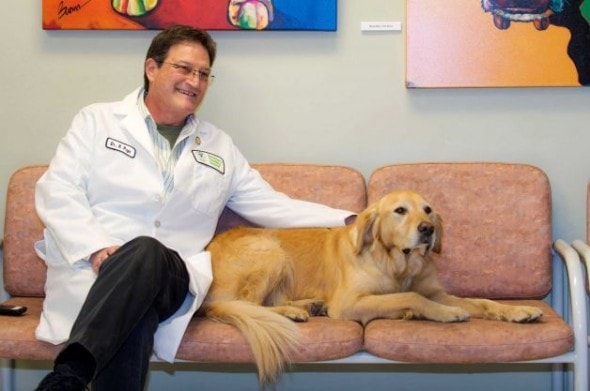
 Cancer is the number one cause of death in older dogs. A new national study funded by the Morris Animal Foundation will study the lives of Golden Retrievers and hopes to answer why some dogs get cancer. The study will track the Golden Retrievers over their entire lives and it will be the largest and longest dog study ever conducted.
The study is being led by Dr. Rodney Page, a professor of veterinary oncology and director of the Flint Animal Cancer Center at Colorado State University. So far 500 Golden Retrievers under the age of two have been signed up for the study and they are hoping to recruit more. One of those dogs is 2-year-old Louie.
When Jay Mesinger heard about the new study and its need for golden retrievers he didn’t hesitate to sing up Louie. Mesinger knows too well what it’s like to lose a dog to cancer, his three previous golden retrievers all died due to complications from cancer. “They all had long lives but were taken by complications from one kind of cancer or another,” said Mesinger.
The study plans to track the lives of 3,000 golden retrievers. They will be tracked for genetic, nutritional and environmental risks to hopefully help veterinarians find ways to prevent canine cancer. It is the largest and first study of its kind. “A landmark study that will change the lives and health of dogs for generations,” said Dr. Page.
The study will focus on bone cancer, lymphoma and hemangiosarcoma (cancer in the blood vessels). All three of these cancers can be fatal to dogs. Dr. Page believes the study will also produce valuable information on other dog diseases such as arthritis and hip dysplasia. The study chose to work with golden retrievers because they are common and “They have unfortunately a high risk of developing cancer,” said Dr. Page.
The Morris Animal Foundation is providing a majority of the $25 million needed for the study. The rest of the funding will come through online public donations that will allow people to sponsor one of the 3,000 golden retrievers volunteering for the study. Although the dogs will be studied over the course of a decade or more Dr. Page expects important information will be yielded much earlier and could even help some of the dogs participating in the study.
For more information on the study, including information on applying to have your golden retriever volunteer, visit http://www.caninelifetimehealth.org.